
If you’ve ever suffered a shoulder injury, then you know how debilitating it can be. Not only are you experiencing persistent pain, but most shoulder injuries also restrict the range of motion in the joint, making day-to-day tasks — from grabbing a cup off the high shelf to brushing your hair — feel nearly impossible.
At Mt. Lehman Physiotherapy Clinic, our team of physiotherapists will work with you to identify and resolve the underlying causes of your shoulder pain. We offer acute pain relief and can guide you through complete shoulder rehabilitation regardless of whether or not you require surgery, and often, you can resolve a shoulder injury with physiotherapy alone!
But that process can take a while, and we want to help you avoid shoulder injuries, too. While we do incorporate injury prevention information into our rehab programs, it’s never a bad time to start incorporating small changes into your routine that can help prevent shoulder pain.
If you’d like to learn more about how we help prevent and alleviate shoulder pain, call us to schedule an appointment today!


What Causes Shoulder Pain and Injury, Anyway?
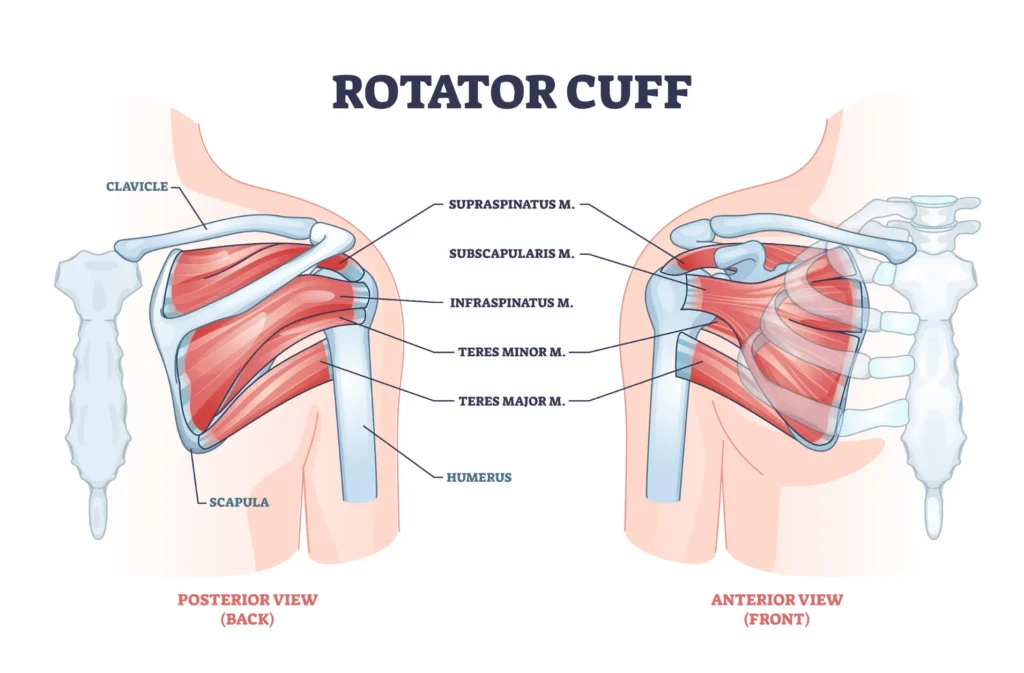
Your shoulder is an incredibly complex ball-and-socket joint with several moving parts, including three separate bones: the humerus (arm bone), scapula (shoulder blade), and clavicle (collarbone); cartilage that wraps and protects these bones from rubbing against each other; the three main ligaments that connect your shoulder’s bones; a collection of muscles and tendons known as the rotator cuff that wrap and support the shoulder joint; and bursae — small fluid-filled sacs that protect your tendons.
Damaging any of these structures can lead to shoulder pain, weakness, and immobility. Some people injure their shoulders through sudden, acute injuries, especially if they’re active — a hard fall on the football field could tear their rotator cuff or dislocate the arm bone out of their shoulder socket.
However, many shoulder injuries are actually overuse injuries, meaning the pain and immobility symptoms occur due to repeated micro-injuries in your shoulder’s tissue. Often, sports-related shoulder injuries are actually due to overuse, as repeated overhead motions (such as throwing a ball or certain swimming strokes) put stress on the shoulder joint, leading to symptoms.
Using improper form can also contribute to overuse injuries, such as improper posture — a weak upper back strains your shoulder muscles, making them do more work than needed.
Preventing shoulder pain is really about preventing these overuse injuries. By making small changes, you can keep your shoulders strong, healthy, and pain-free!
5 Ways You Can Help Prevent Shoulder Pain
Click each tip below to learn more about keeping your shoulders strong, healthy, and pain-free.
Exercise of the Month
Dumbbell Shoulder Press
(Shoulders, Upper Arms)
Stand tall with a dumbbell in each hand, elbows bent, and weights held at shoulder height with palms facing forward. Press both dumbbells overhead until your arms are fully extended. Pause briefly at the top, then slowly lower the weights back to shoulder height. 3 Sets, 10 Reps. (Materials needed: dumbbells)
Three Exercises to Strengthen Your Shoulders and Upper Back
Maintaining strength throughout your shoulders and upper back is crucial to avoid neck pain! The physiotherapists at Mt. Lehman Physiotherapy Clinic can help you develop a customized exercise program that addresses your needs and fits with your abilities.
Curious about what exercises we might include in that program? Here’s an overview of three common resistance training exercises we often use to help people with neck discomfort. Before trying any of them yourself, make an appointment with our team to ensure you’re using the right weight and proper form.
1. Shoulder Press
With a dumbbell in each hand, make a “field goal” shape with your arms: your arms are bent at a 90-degree angle with your palms facing up. Brace your core as you press the weights overhead, then slowly lower them back down to your starting position.
2. Reverse Flies
Lean forward at your waist with your elbows slightly bent and dumbbell in each hand. Slowly raise the weights until they are in line with your shoulders.
3. Modified Push-Ups
Push-ups are a great way to build upper back and shoulder strength, but if you find the standard push-up too difficult, never fear: the modified version is just as effective. Start on your hands and knees (instead of your feet) with the body in a straight line from head to knee. Slowly lower your chest until it’s a few inches off the floor, then rise back up.
A dedicated strength-training program is a great way to reduce neck discomfort. Schedule an appointment with us to get started with one of your own!
Healthy Recovery Recipe: Lemon Herb Salmon & Broccoli Rice Bowl
This simple, anti-inflammatory bowl supports tissue repair and reduces inflammation — perfect fuel for shoulder recovery. Salmon provides omega-3 fatty acids to help calm swelling.
Ingredients (serves 2):
1 cup brown rice · 2 salmon fillets (about 150g each) · 1 cup cooked broccoli · 1 lemon (zest + juice) · 2 cloves garlic, minced · 1 tbsp olive oil · 1 tsp dried dill · Salt and pepper to taste · Optional: sliced cucumber and cherry tomatoes
Directions:
Cook brown rice according to package directions. Season salmon with garlic, dill, lemon zest, salt, and pepper. Heat olive oil in a skillet over medium heat and cook salmon 3–4 minutes per side until flaky. Assemble bowls with rice, cooked broccoli, and salmon. Squeeze fresh lemon juice over the top and add optional toppings. Serve immediately.

Need A Little Help? We’ve Got You
The Mt. Lehman Physiotherapy Clinic physiotherapists can help you prevent shoulder injuries as easily as we can treat them! Whether you’re looking for a shoulder stretch and strengthen routine, postural corrections, or some simple ergonomic adjustments, we’re here for you.
Call us today to get started!
Sources: https://www.ncbi.nlm.nih.gov/books/NBK554693/, https://www.physio-pedia.com/Evidence_Based_Interventions_for_Shoulder_Pain, https://www.ncbi.nlm.nih.gov/pmc/articles/PMC10086287/, https://www.physio-pedia.com/Neck_Pain_Tool-kit:_Step_3